


Project Context
The Hub is an academic project at Langara College for the Web and Mobile App Design and Development program, delivered over a focused 12-week sprint in a cross-functional design and development environment.
The brief required a responsive, data-driven web app integrating live APIs and visualization. To meet evaluation criteria, we defined a structured plan and documentation that guided an MVP with clear information architecture, intuitive user experience, and reliable performance.
Our team set out to create a platform for DIY enthusiasts that brings curated content, search, and community into one place. As part of the design team, I led the visual direction and interface system, aligning layout, hierarchy, and components to keep the interface clear and approachable.
The brief required a responsive, data-driven web app integrating live APIs and visualization. To meet evaluation criteria, we defined a structured plan and documentation that guided an MVP with clear information architecture, intuitive user experience, and reliable performance.
Our team set out to create a platform for DIY enthusiasts that brings curated content, search, and community into one place. As part of the design team, I led the visual direction and interface system, aligning layout, hierarchy, and components to keep the interface clear and approachable.
Research and Strategy
The early COVID-19 context accelerated DIY culture in Canada, with people spending more time at home and looking for hands-on projects. Our review of blogs, social channels, and media coverage showed abundant content and commercial interest, but scattered experiences and cluttered interfaces made it hard to find reliable information in one place.

Audience snapshots showed a clear preference for curated content over noisy sites. This defined the opportunity for The Hub as a platform where DIY content, search, and community live in one place, with partnerships that support rather than distract.

Building an Identity
I created The Hub identity as a simple, energetic system that supports DIY content while staying recognizable across touchpoints. The logo, colours, typography, buttons, and icons form the base components so pages feel consistent, easy to use, and ready to scale.

Beyond the interface, I conceptualized and developed a digital campaign to communicate the product story and attract sign-ups with the target audience. I expanded the system by integrating curated royalty-free illustration and 3D elements with The Hub brand to speak to makers, highlight the core value, and lead them into a clear, enjoyable experience.

From Interest to Action
The Hub introduces itself quickly and invites people straight into exploring. The MVP uses drink recipes as the main focus to demonstrate the model: curated projects, clear steps, and simple ways to dive in or sign up. The structure, language, and layout are designed so the platform can extend to any DIY niche.

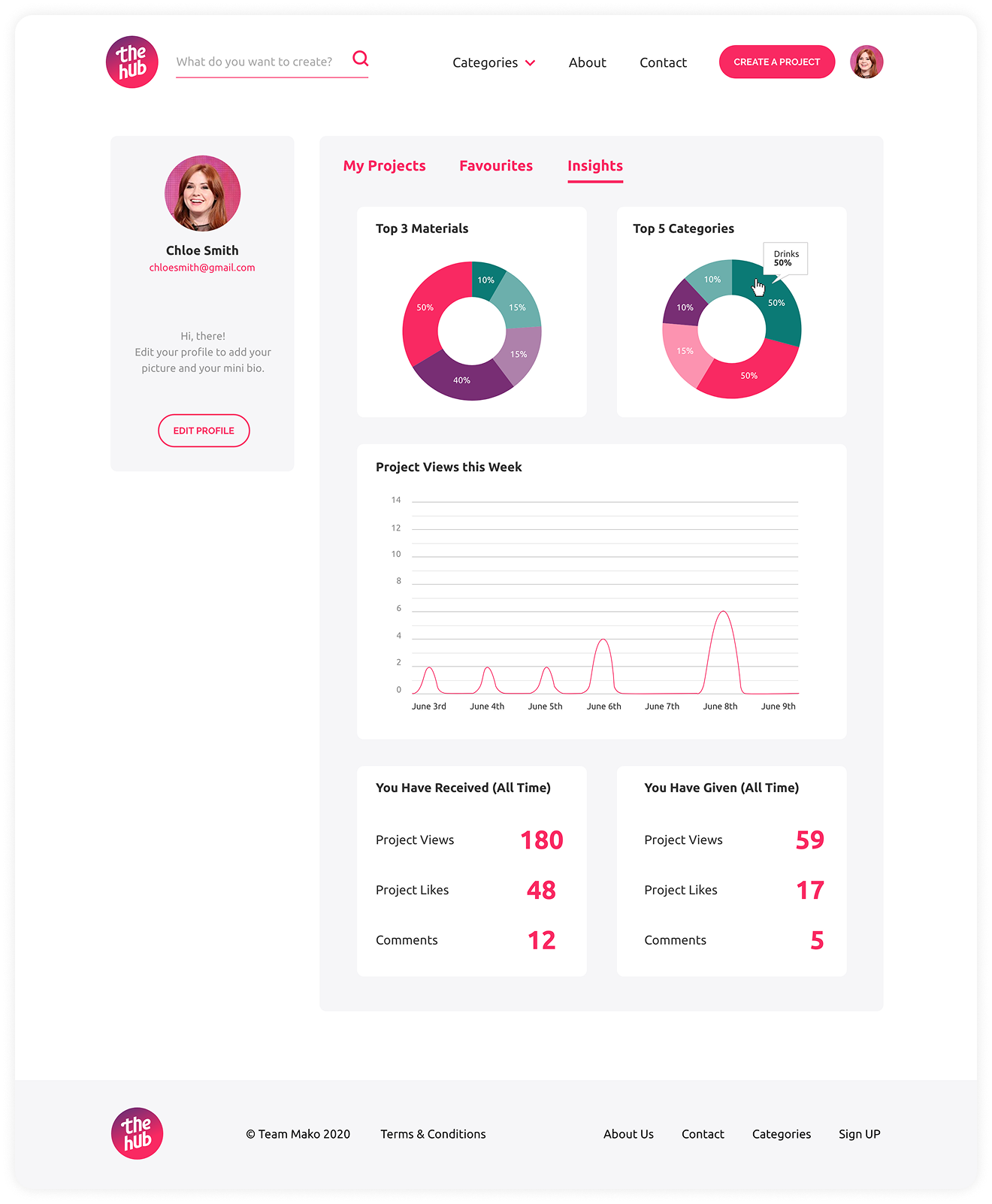
We delivered a responsive, data-driven experience with live information and a clear dashboard. People can see what is trending, filter by interests, and feel confident they are choosing relevant projects. Together, the landing and data layer show a working path from first impression to meaningful engagement.
From Concept to MVP
The Hub integrates research, identity, interface, and content into a functioning MVP. As part of a cross-functional team, I shaped the visual system, entry experience, and campaign assets so the product feels coherent end-to-end, from first impression through to creating and exploring projects driven by live data.

On the implementation side, the build was validated with strong Google Lighthouse scores across performance, accessibility, and SEO. The result is a scalable DIY platform, ready to extend into new themes, partnerships, and communities.